
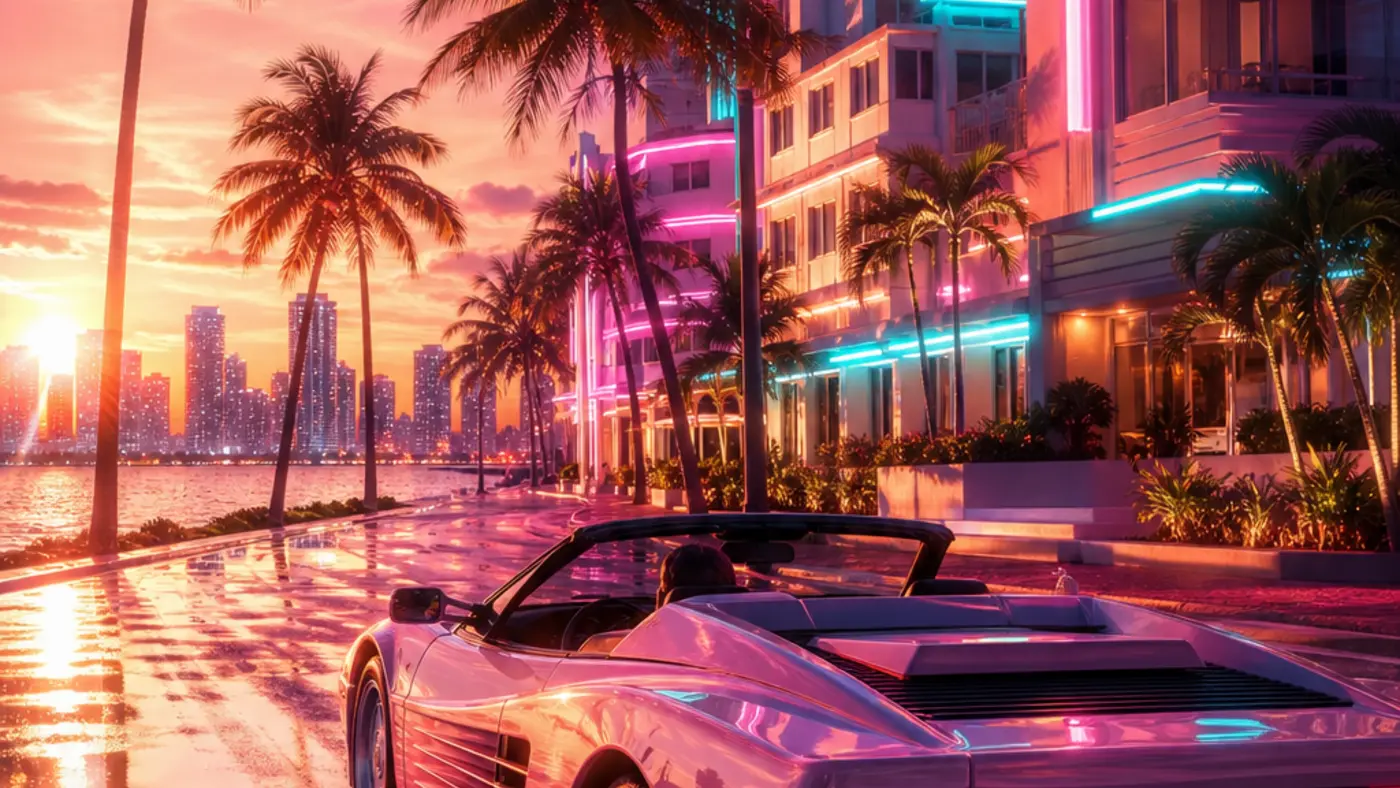
Four years before GTA San Andreas, two decades before Vice City’s announced return in GTA 6, one game locked in the image of the series for good: palm trees, neon and shootouts at sunset. GTA Vice City is about to turn 24, and it remains one of Rockstar’s most beloved entries. Here’s why.
A commercial smash hit in 2002
Released on October 29, 2002 on PlayStation 2, GTA Vice City is the work of Rockstar North, the Scottish studio already behind GTA III a year earlier. The game runs on the RenderWare engine, and it builds on its predecessor in spectacular fashion. The launch was explosive: 500,000 copies sold in 24 hours, 1.4 million in two days, a record at the time. All told, the original topped 17.5 million copies across all platforms, including more than 14 million on PS2 alone, and was the best-selling game of 2002 in the United States.
Critics followed the crowd. With a 95/100 on Metacritic, Vice City settled in among the highest-rated PlayStation 2 games and swept up a haul of awards. Along the way, it set several firsts for the series: motorcycles, playable for the first time, and above all a protagonist who actually speaks, where GTA III’s silent hero had stayed an empty shell.
Tommy Vercetti and a cast worthy of Hollywood
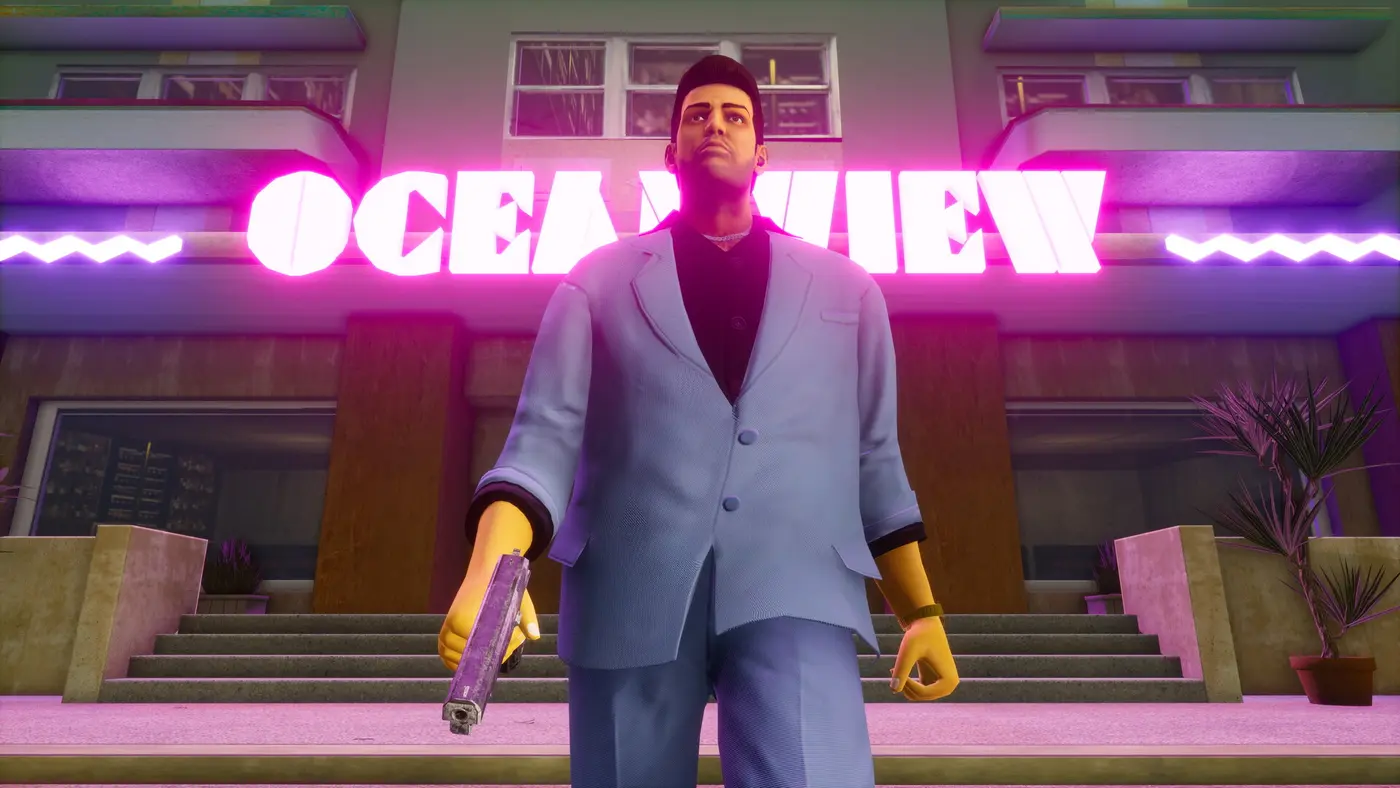
That hero is Tommy Vercetti, a mobster fresh out of fifteen years behind bars and sent to Vice City to build an empire. Lending him his voice: Ray Liotta, the Henry Hill of Goodfellas, a casting choice that alone signaled the project’s cinematic ambition. Rockstar packed in nearly 8,000 lines of dialogue, four times as many as GTA III, and recruited a roster of stars to deliver them.
Orbiting Liotta are Burt Reynolds as a crooked real-estate developer, Dennis Hopper as an adult-film director, Tom Sizemore as a mob boss, Luis Guzmán as drug baron Ricardo Diaz, and William Fichtner as lawyer Ken Rosenberg. A perfect nod to the spirit of the game: Tommy’s right-hand man, Lance Vance, is voiced by Philip Michael Thomas, none other than Detective Ricardo Tubbs from the Miami Vice TV series. The circle is complete.
1980s Miami, the real main character
If Vice City left such a mark, it’s because its city is every bit as good as its story. Inspired by Miami, the fictional metropolis drops the player into 1986, at the peak of the cocaine-and-glitz golden age. Rockstar draws unapologetically on two openly acknowledged references: Brian De Palma’s Scarface, released in 1983, for the arc of the ambitious criminal, and the Miami Vice TV series for the pastel aesthetic, the rolled-up sleeves and the speedboats.
The result is art direction with rare cohesion: Art Deco architecture repainted in pink and turquoise, neon signs, palm-lined avenues, packed beaches and late-afternoon thunderstorms. GTA has never stopped cultivating that powerful visual identity. It’s that same identity, modernized, that shows up in the first images of Leonida.
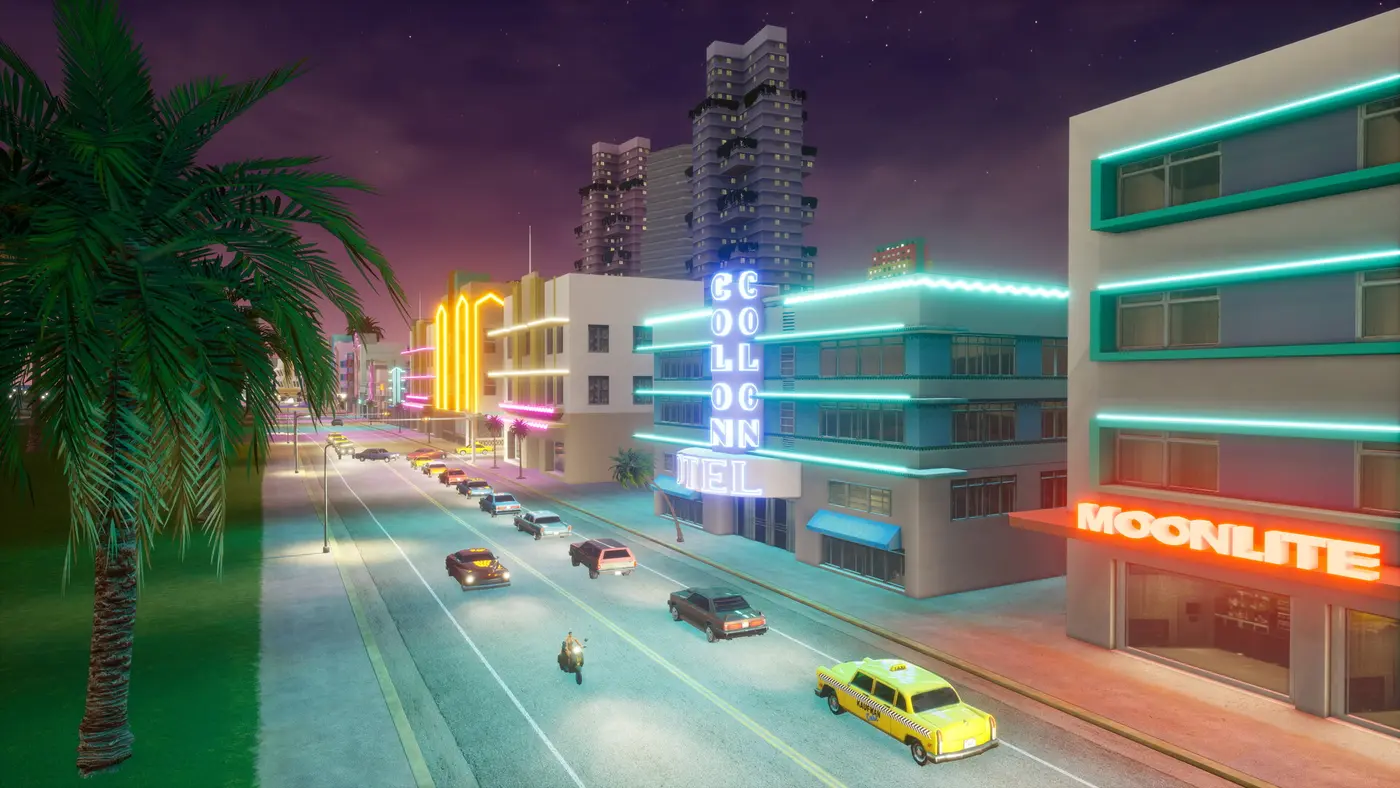
To grasp just how much Rockstar leans on real places, our deep dive into the real-life cities behind GTA’s maps breaks down the models for Vice City, Los Santos and the rest.
A soundtrack that schooled a generation
Vice City’s other killer weapon is its radio. The game packs nine stations and around a hundred licensed tracks, a catalog that doubled as a crash course in 1980s music history for plenty of players. V-Rock blasts hard rock and metal, Flash FM lines up pop hits, Wave 103 spins new wave and synthpop, and Fever 105 deals in soul, funk and disco. On top of that come talk stations, including the satirical VCPR.
That legacy has a downside in 2026, though: several tracks have been removed from versions sold after 2012, thanks to expired music licenses. It’s one of the few areas where the re-releases don’t quite match the original cartridge.
Where to (re)play Vice City today
No need to dig out a PlayStation 2 to dive back in. Since 2021, Vice City has been available in a remastered version, Grand Theft Auto: Vice City – The Definitive Edition, which modernizes the textures, lighting and handling while keeping the spirit of the original.
| Version | Release | Platforms |
|---|---|---|
| Original | October 29, 2002 | PlayStation 2, then PC (May 2003) and Xbox (November 2003). |
| Definitive Edition (consoles and PC) | November 11, 2021 | PS5, PS4, Xbox Series, Xbox One, Nintendo Switch and PC. Reworked textures and lighting. |
| Definitive Edition (mobile) | December 14, 2023 | iOS and Android, with touch controls and controller support. |
A messy launch in late 2021, this Definitive Edition has since been heavily fixed through patches. To find out what it’s really worth today, see our detailed review of the GTA Trilogy Definitive Edition. And if you want to (re)play the series in the right order, we’ve ranked all the GTA games in order.
From 2002 Vice City to Leonida
If Vice City is back in the conversation so much in 2026, it’s obviously because Rockstar is returning to it. Grand Theft Auto VI, due November 19, 2026 on PS5 and Xbox Series, once again sets its stage in Vice City, now tucked inside the fictional state of Leonida. This time, though, the studio swaps 1980s neon for a modern era, and a city incomparably bigger and more detailed than the 2002 one.
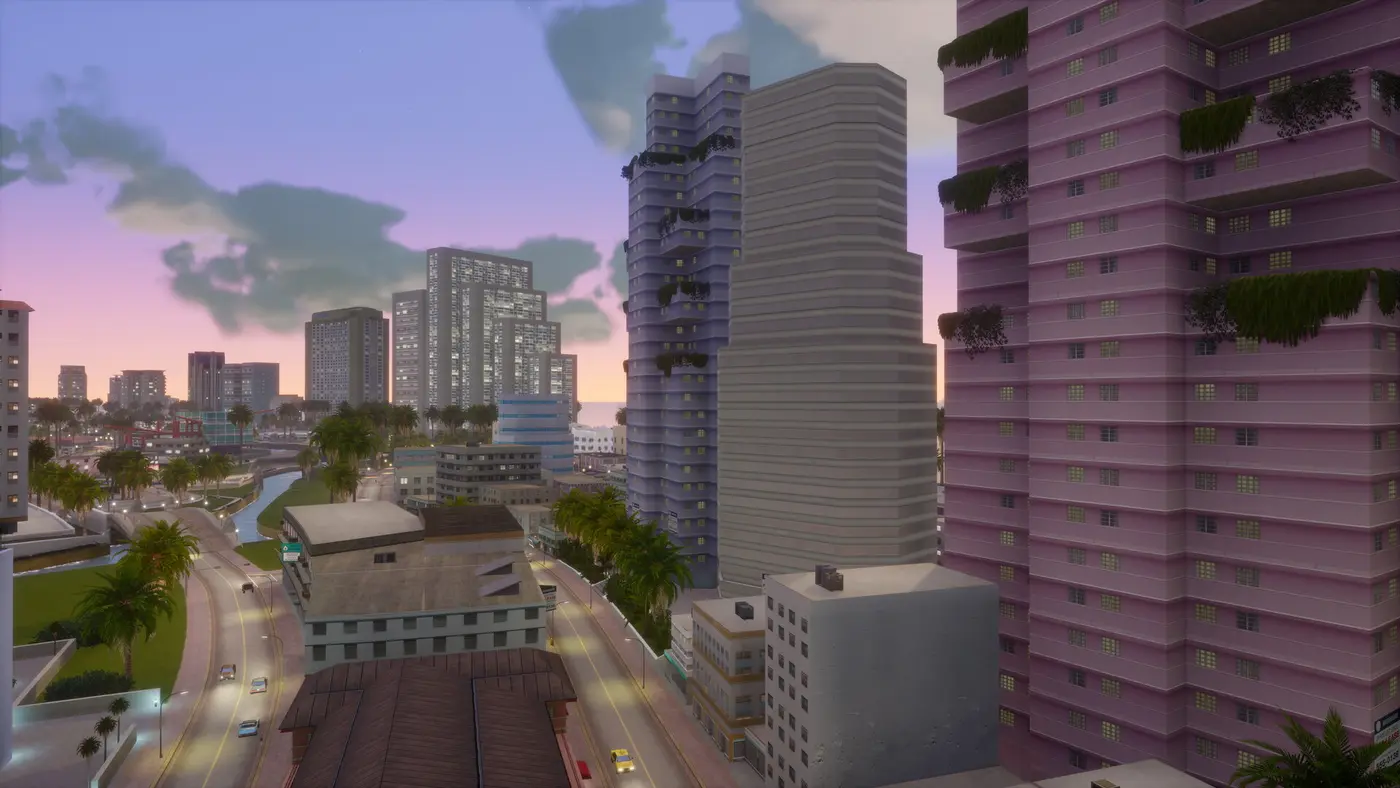
So replaying the original before the big night is no idle nostalgia trip: it’s the best way to measure how far things have come, and to understand the DNA of a city Rockstar has never truly left behind. To follow the countdown, keep an eye on our dedicated GTA 6 release date page. Twenty-four years on, Tommy Vercetti can be proud: his city has never been so coveted.
Comments
Be the first to react.